

Author’s Note: Fires of the Old World XX — The Mud-Hunter
On mud, laughter, the open hand, and the revisions that moved the tale from explanation to embodiment.

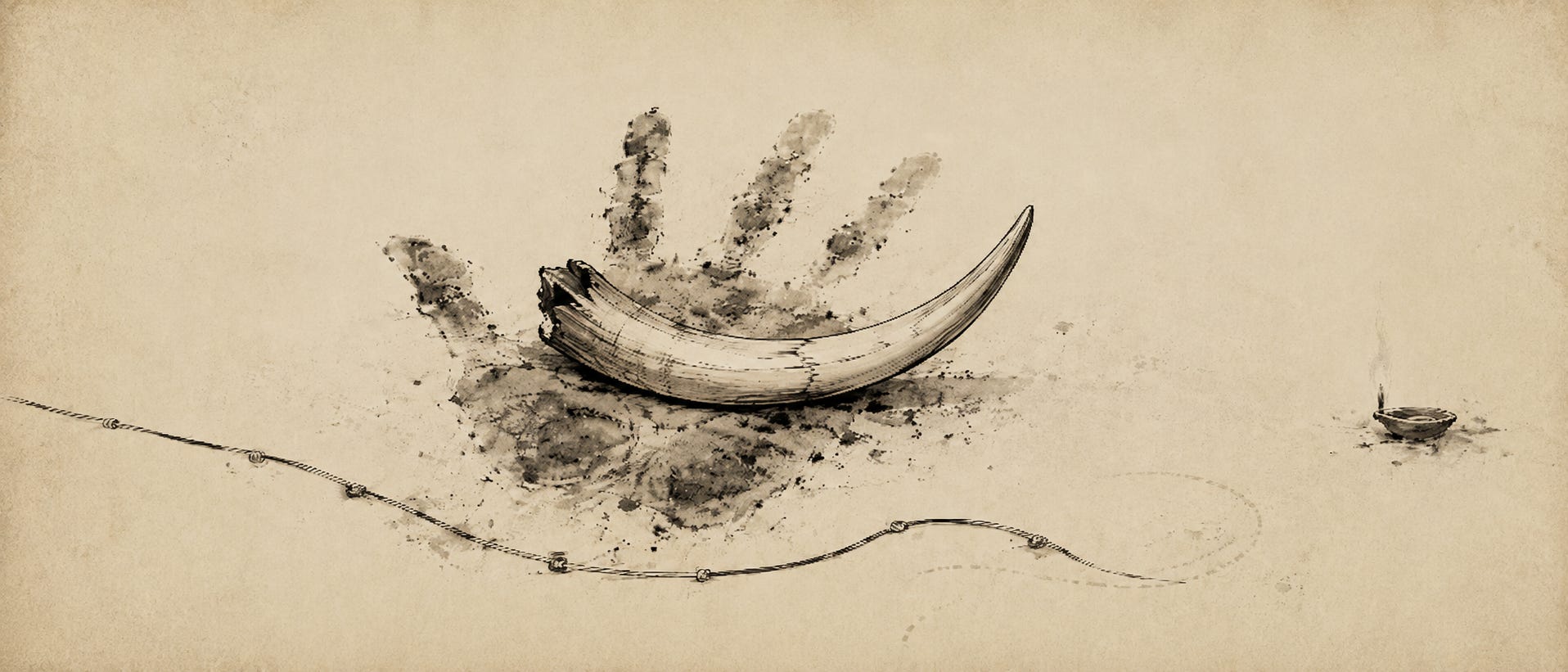
This tale nearly failed in the places where it tried to understand itself too directly.
That is a particular danger with a story like Arjuna and the hunter. The source has grandeur, combat, divine recognition, and a terrible weapon waiting at the centre of it. It would have been easy to make the retelling solemn too soon, or to explain Arjuna’s pride before the mud had done its work.
The better version of the tale arrived through smaller things: a stomach hollowing while pride remained intact; a woman shading a lamp in daylight; flowers moving from wet clay into the hunter’s hair; a cup overturned beside a wheel; a child’s palm left open at the end.
The main revision was not decorative. It was a movement from statement to embodiment.
In the paid note below, I want to trace how the tale found its centre, why the hunter had to laugh, what the weapon passage almost explained too clearly, and how one line about a measuring cord became the final hinge of the revision.
