


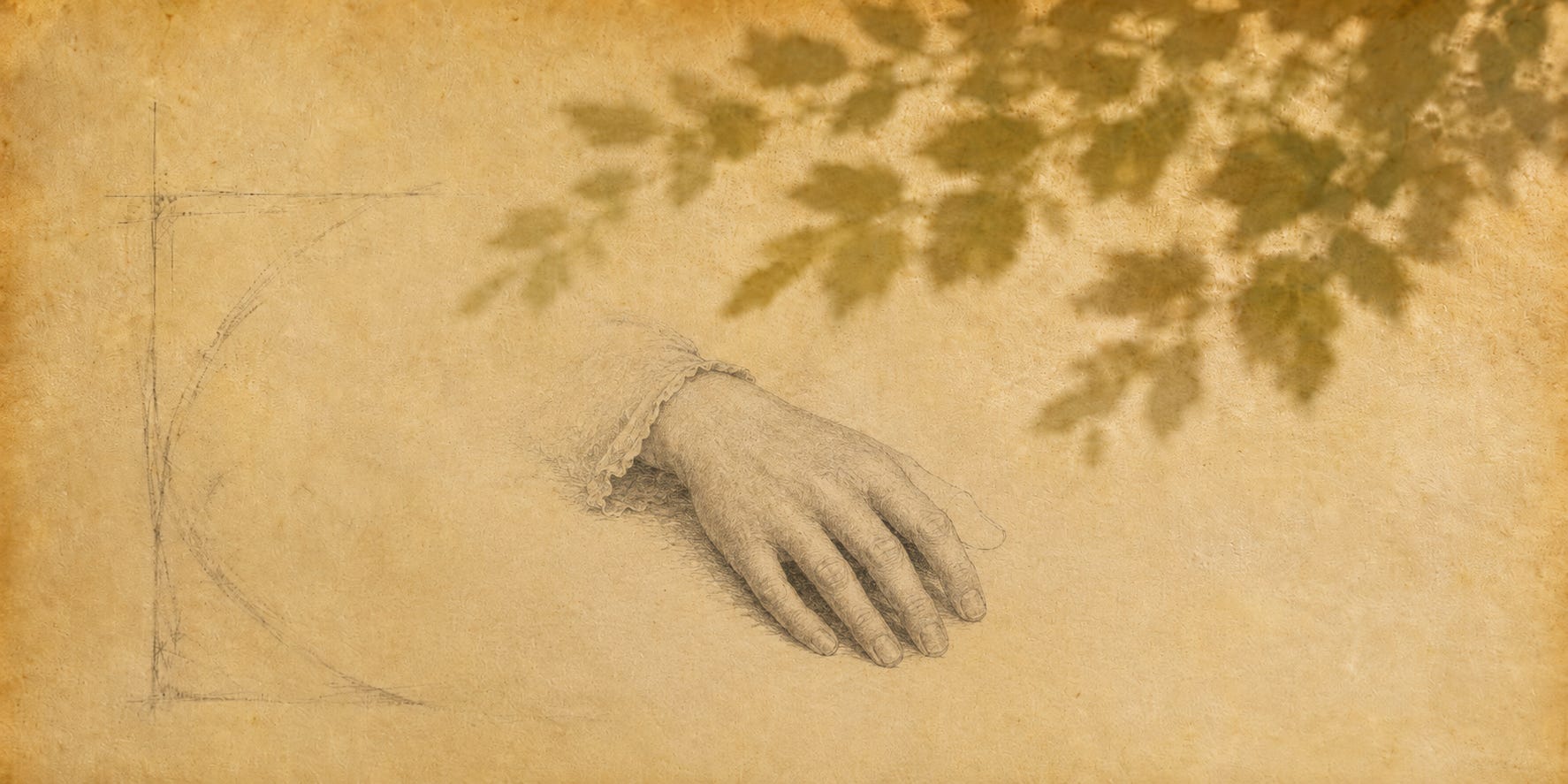
This essay nearly failed because it understood eucatastrophe too cleanly.
The sources were generous. Tolkien had supplied the definition, the Eagles, the failure at Mount Doom, the language of grace, and the Resurrection beyond them all. The argument could have moved from sorrow to consolation with a beautiful inevitability.
That was the danger.
The more complete the explanation became, the less room it left for Frodo’s hand.
At first, the missing finger was evidence: one detail among several proving that victory had not restored everything. Then it became clear that it could not remain a detail. Sam asks whether everything sad is going to come untrue beside a body that has not been made whole. Any essay that answered him too quickly would console more completely than Tolkien does.
The decisive revision was to let the hand govern the structure: beneath the leaves at the beginning, after Mount Doom at the centre, and resting in the light at the close.
But that choice created the harder question.
If the wound must remain, what kind of hope can the essay still honestly offer?
